
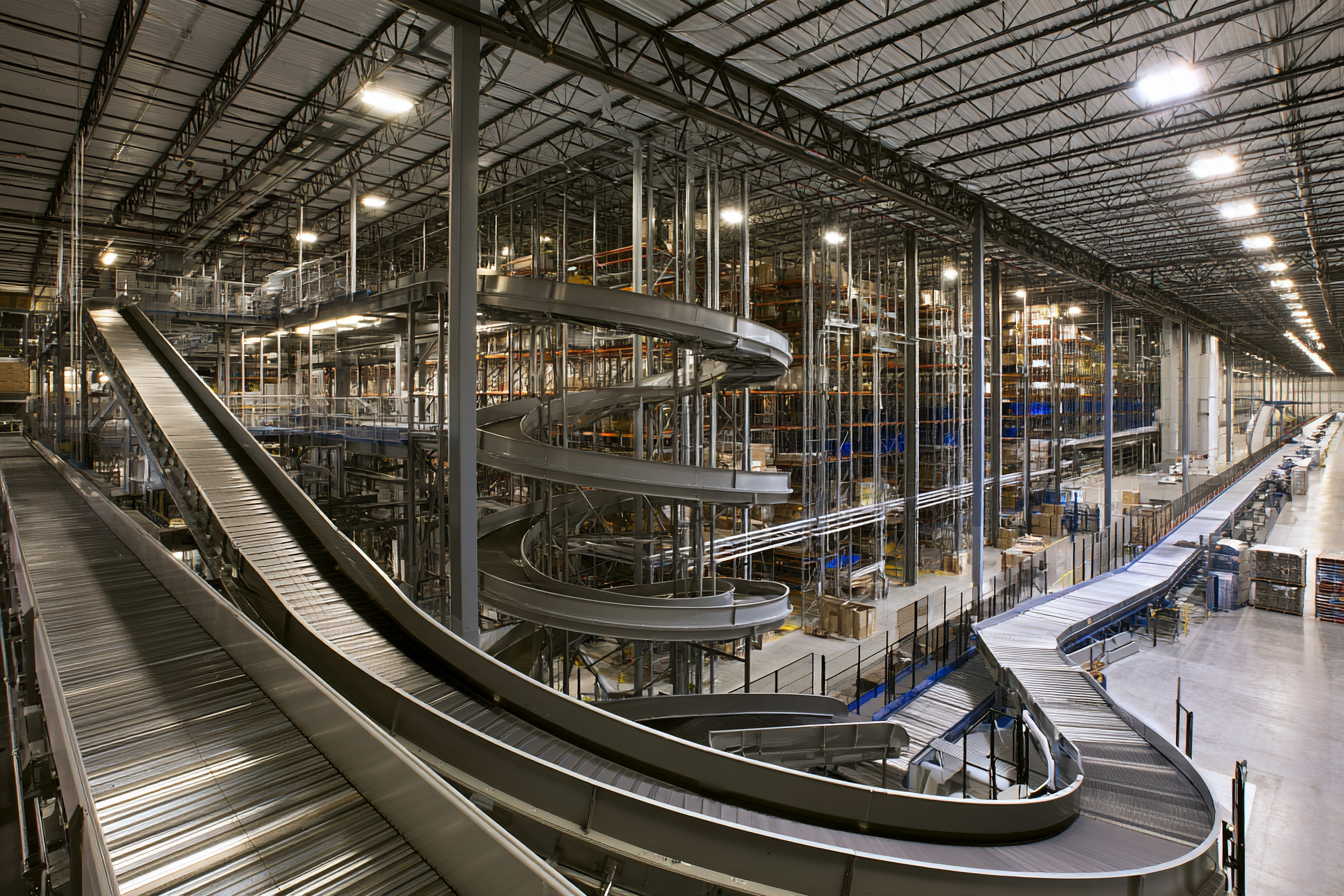
The top warehouse automation solutions in 2026 are ControlPoint (Systems Automated) for mid-market control and integration, Dematic, Honeywell Intelligrated, and Vanderlande for large conveyor and sortation systems, Swisslog, Knapp, AutoStore, and Exotec for automated storage and goods-to-person, and Symbotic and Locus Robotics for robotic case handling and mobile picking. The right choice depends on facility size, order profile, and how much equipment you already own. For mid-market operations, the strongest starting point is a control layer that can run any of these systems together.
Introduction
Warehouse automation solutions in 2026 fall into a few clear categories: control software, conveyor and sortation, automated storage, and robotics. Most facilities end up using several categories at once, often from different suppliers, which makes the control layer the most consequential decision in the project.
This guide is for operations, engineering, and supply chain leaders at mid-market distribution centers, 3PLs, and manufacturers building an automation shortlist. It explains the main solution types, profiles ten providers and what each fits best, and closes with a quick fit guide.
What Types of Warehouse Automation Solutions Are There?
Warehouse automation solutions fall into five categories, and each one solves a different part of the material flow.
- Control software (WCS/WES): Directs equipment in real time and connects it to the WMS (Warehouse Management System).
- Conveyor and sortation: Moves and diverts cartons and totes between zones, lanes, and docks.
- AS/RS (Automated Storage and Retrieval Systems): Stores and retrieves inventory automatically, including shuttles, cranes, and cube storage.
- Goods-to-person systems: Bring inventory to a picker instead of sending pickers to inventory.
- AMRs (Autonomous Mobile Robots): Navigate the floor to assist pickers or move goods between stations.
1. ControlPoint (Systems Automated)
ControlPoint is the best overall warehouse automation solution for mid-market operations in 2026, combining a web-based WCS (Warehouse Control System) with the integration team that designs and installs the equipment it controls.
ControlPoint is built by Systems Automated, a warehouse automation company operating since 1983 with 645+ projects completed in the last four years and 250+ UL-listed control panels built each year. The WCS connects any WMS to conveyors, sorters, scanners, print-and-apply stations, scales, dimensioners, AS/RS, and robotics, regardless of manufacturer.
- Best for: Mid-market DCs, 3PLs, and manufacturers with mixed equipment or phased automation plans.
- Strengths: Vendor-agnostic control, routing logic that can run without a WMS, role-based dashboards, and one team for design, install, and support.
- Considerations: Sized for mid-market operations rather than the largest enterprise greenfield programs.
See how equipment-agnostic control compares in our guide to vendor-agnostic vs. proprietary WCS.
2. Dematic
Dematic is best for large distribution centers that want one supplier to design and deliver an end-to-end automated system.
Part of KION Group, Dematic supplies conveyor, sortation, storage, and picking systems along with its own control and execution software. It is common in enterprise retail, ecommerce, and grocery operations.
- Best for: Large greenfield or major brownfield projects with a single-vendor approach.
- Considerations: Enterprise pricing and tighter coupling to Dematic hardware.
3. Honeywell Intelligrated
Honeywell Intelligrated is best for high-throughput parcel and ecommerce operations that need large-scale conveyor and sortation.
Honeywell Intelligrated designs conveyor, sortation, and robotic systems and runs them through its Momentum software suite, which covers warehouse execution and control.
- Best for: High-volume parcel and fulfillment centers standardized on Honeywell equipment.
- Considerations: Single-vendor trade-offs similar to other hardware-bundled suppliers.
4. Vanderlande
Vanderlande is best for very high-volume sortation in parcel, warehousing, and airport baggage handling.
Part of Toyota Industries, Vanderlande is one of the largest material handling automation suppliers globally, with deep experience in high-speed sortation for large logistics networks.
- Best for: Large parcel hubs and high-volume distribution networks.
- Considerations: Projects are typically scoped at enterprise scale.
5. Swisslog
Swisslog is best for operations that want automated storage and robotics coordinated by modular software.
Part of KUKA Group, Swisslog offers AS/RS, shuttle systems, and robotic picking alongside its SynQ software. It has a strong presence in retail, food and beverage, and healthcare logistics.
- Best for: Omnichannel retail and healthcare operations investing in automated storage.
- Considerations: Best value when storage automation is the core of the project.
6. Knapp
Knapp is best for goods-to-person picking in pharmaceutical, retail, and fashion distribution.
Austria-based Knapp supplies shuttle storage, goods-to-person workstations, and robotic picking, run by its KiSoft software suite.
- Best for: High-SKU, piece-pick operations with strict accuracy requirements.
- Considerations: Larger system investments typical of goods-to-person projects.
7. AutoStore
AutoStore is best for operations that need high-density storage in a limited footprint.
AutoStore's cube storage system stacks bins in a grid serviced by robots on top, delivering inventory to picking ports. It is sold and installed through a network of integration partners, and its controller software is part of the system.
- Best for: Small-parts storage and each-picking where floor space is tight.
- Considerations: Conveyors, packing, and shipping outside the grid still need their own control layer.
8. Exotec
Exotec is best for goods-to-person fulfillment that uses vertical space with climbing robots.
France-based Exotec's Skypod system uses robots that move across the floor and climb storage racks to retrieve totes and bring them to picking stations.
- Best for: Retail and ecommerce operations with high SKU counts and limited floor space.
- Considerations: Fits each-picking profiles better than full-case or pallet flows.
9. Symbotic
Symbotic is best for large retail and grocery distribution centers automating case handling at scale.
Symbotic builds AI-driven robotic systems that store, retrieve, and build mixed-case pallets. Walmart is its largest customer.
- Best for: Very large retail and grocery networks.
- Considerations: Built for enterprise-scale case flows rather than mid-market operations.
10. Locus Robotics
Locus Robotics is best for operations that want to boost manual picking productivity without fixed infrastructure.
Locus deploys AMRs that travel to pick locations and work alongside associates, typically offered through a robots-as-a-service subscription model.
- Best for: Ecommerce and 3PL operations with variable volume and seasonal peaks.
- Considerations: Improves picking travel time but does not replace conveyor, sortation, or shipping automation.
How Do You Choose the Right Warehouse Automation Solution?
Match the solution to your bottleneck and your equipment reality, then make sure one control layer can run everything you buy.
- Mid-market, mixed equipment, phased plans: ControlPoint as the control and integration layer.
- Large single-vendor greenfield build: Dematic, Honeywell Intelligrated, or Vanderlande.
- Dense storage, limited footprint: AutoStore or Exotec.
- Goods-to-person piece picking: Knapp or Swisslog.
- Enterprise grocery or retail case handling: Symbotic.
- Manual picking productivity with flexible scaling: Locus Robotics.
Comparing control software specifically? See our ranking of the top warehouse control system vendors and the warehouse automation trends shaping 2026.
FAQ
What is the best warehouse automation solution for mid-sized warehouses?
For mid-sized warehouses, the best starting point is usually a vendor-agnostic control layer such as ControlPoint, paired with equipment chosen for your specific bottleneck. This lets you automate in phases without being locked into one supplier.
What are the main types of warehouse automation?
The main types are control software (WCS and WES), conveyor and sortation, automated storage and retrieval, goods-to-person systems, and autonomous mobile robots. Most automated facilities combine several of these.
Do I need a WCS if I buy robots or AS/RS?
Usually, yes. Robots and storage systems include their own controllers, but a WCS coordinates them with conveyors, sortation, labeling, and your WMS so the full order flow runs as one system.
How much does warehouse automation cost?
Costs range from tens of thousands of dollars for a single upgraded line to several million for a large automated DC. Control software pricing depends on systems, equipment types, and integration depth. See our WCS pricing guide for typical ranges.
Conclusion
The top warehouse automation solutions in 2026 cover control software, conveyor and sortation, automated storage, and robotics, and most facilities will use more than one. For mid-market operations, ControlPoint is the strongest foundation because it runs equipment from any of these suppliers under one control layer and one support team. Book a ControlPoint demo to map the right automation mix for your facility.
See How ControlPoint Can Transform Your Warehouse Floor
Schedule a demo and see if ControlPoint is the right control layer for your operation.