
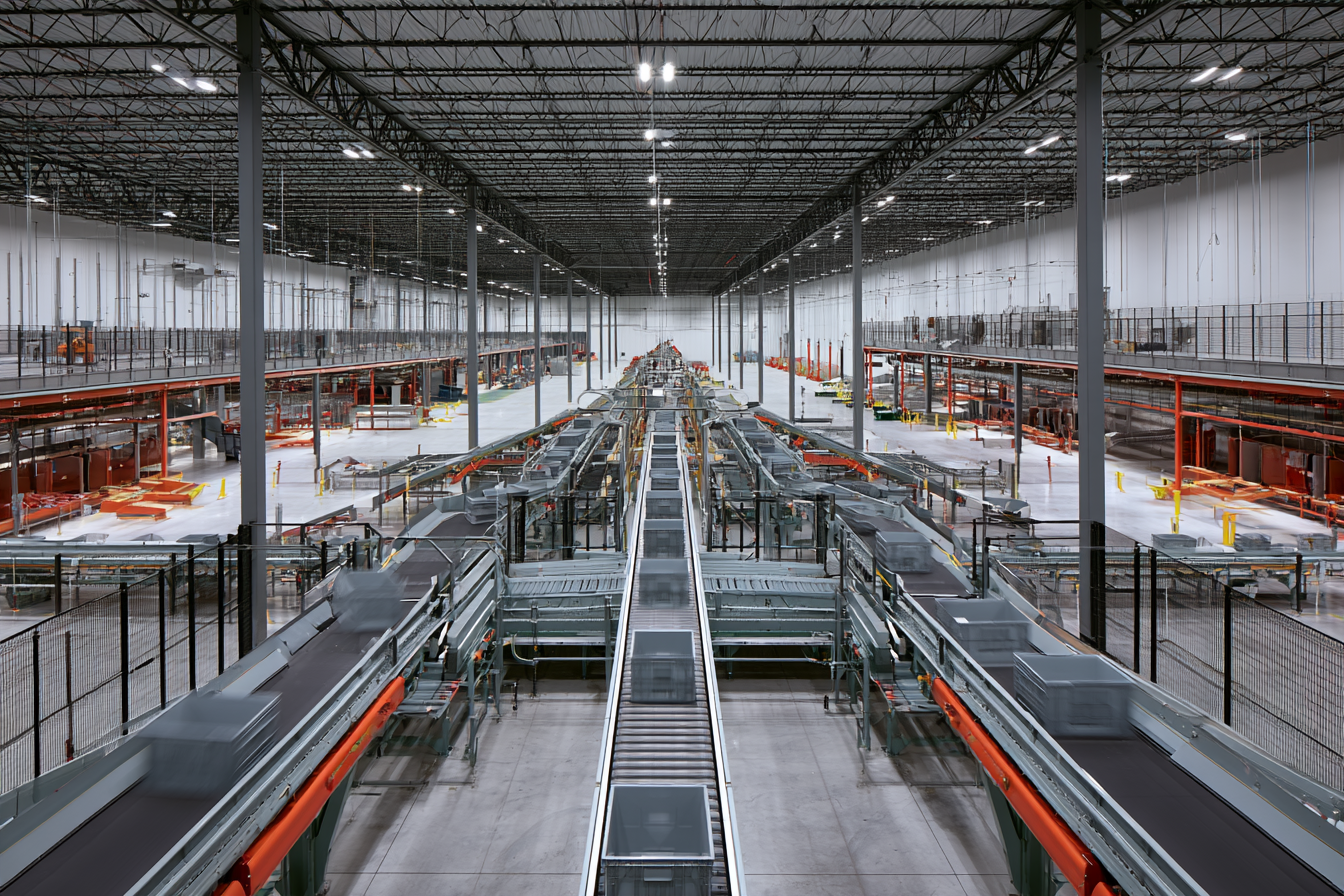
The top warehouse execution systems in 2026 are ControlPoint for mid-market operations, Honeywell Momentum, FORTNA WES, Bastian Solutions Exacta, Softeon WES, Körber, Manhattan Active Warehouse Management, Dematic, Knapp KiSoft, and Swisslog SynQ. Enterprise WES suites fit large, highly automated distribution centers with complex order release logic. Mid-market facilities usually get more value from a WCS that adds execution-level routing and orchestration without the cost and timeline of a full enterprise WES.
Introduction
Warehouse execution systems coordinate order release, equipment, and labor in real time so automated facilities run at full capacity. The market splits into enterprise WES suites, often tied to an equipment supplier or WMS vendor, and lighter platforms built for mid-market operations.
This guide is for operations, engineering, and IT leaders evaluating WES software for a new automation project or to fix gaps between an existing WMS and WCS. It explains what a WES does, profiles ten options, and gives a fit guide and vendor questions to narrow your shortlist.
What Does a Warehouse Execution System Do?
A WES (Warehouse Execution System) decides which work to release to the floor and when, based on live equipment, labor, and order status.
- Order release and sequencing: Releases work continuously instead of in fixed waves, based on what the floor can handle.
- Zone balancing: Keeps picking, sortation, and packing zones evenly loaded.
- Equipment coordination: Directs work across conveyors, sorters, AS/RS, and robots, often through a WCS (Warehouse Control System).
- Labor direction: Assigns tasks to people based on live priorities.
- Visibility: Shows throughput, backlog, and bottlenecks in real time.
For a full breakdown of how these systems differ, see WCS vs. WMS vs. WES and our complete warehouse execution system guide.
1. ControlPoint
ControlPoint is the best warehouse execution option for mid-market operations in 2026: a web-based WCS that runs execution-level routing and orchestration across equipment from any manufacturer.
Built by Systems Automated, a warehouse automation company since 1983, ControlPoint sits between the WMS and the floor, turning orders into real-time equipment commands. It handles routing by carrier, destination, sorter, or truck, automated merge, label, and put-to-pallet logic, and can run advanced routing even without a WMS in place.
- Best for: Mid-market DCs, 3PLs, and manufacturers that need real-time orchestration without an enterprise WES program.
- Strengths: Vendor-agnostic connectivity, integrations with WMS platforms including Extensiv, SAP, Manhattan, Microsoft Dynamics, Infor, Blue Yonder, and ShipHero, and one team for design, install, and support.
- Considerations: Focused on control and floor-level orchestration rather than labor management or slotting suites.
2. Honeywell Momentum WES
Honeywell Momentum is best for high-volume operations already running Honeywell Intelligrated conveyor and sortation.
Momentum is Honeywell Intelligrated's software suite covering warehouse execution, control, and machine-level functions in one architecture.
- Best for: Large parcel and ecommerce centers standardized on Honeywell equipment.
- Considerations: Strongest fit inside a Honeywell hardware environment.
3. FORTNA WES
FORTNA WES is best for large distribution operations that want execution software paired with design and integration services.
FORTNA provides distribution design, automation integration, and its own WES software for orchestrating fulfillment across automated and manual processes.
- Best for: Enterprise retail and ecommerce DCs undergoing major redesigns.
- Considerations: Scoped and priced for larger programs.
4. Bastian Solutions Exacta
Bastian Solutions Exacta is best for integrator-led projects that need WES software with industry-specific workflows.
Bastian Solutions, a Toyota Advanced Logistics company, offers the Exacta software suite, which includes WES functionality. Bastian expanded Exacta by acquiring Forte Engineering, a WES provider focused on the wine and spirits industry.
- Best for: Operations already working with Bastian as a systems integrator, including beverage distribution.
- Considerations: Typically purchased as part of a Bastian integration project.
5. Softeon WES
Softeon WES is best for operations that want WES capability across automated, semi-automated, and manual processes.
Softeon offers its WES on its own or combined with Softeon WMS. The company positions it for operations with high, medium, or low levels of automation.
- Best for: Operations with mixed manual and automated workflows.
- Considerations: Deepest value when paired with Softeon WMS.
6. Körber
Körber is best for operations that want a best-of-breed software layer across equipment from multiple suppliers.
Körber's supply chain software includes WMS and execution capabilities designed to work across mixed automation environments.
- Best for: Larger operations running equipment from several vendors.
- Considerations: Support may be split between Körber and separate hardware vendors.
7. Manhattan Active Warehouse Management
Manhattan Active Warehouse Management is best for large omnichannel retailers that want WMS and execution capabilities on one cloud-native platform.
Manhattan's cloud-native platform combines warehouse management with execution and automation orchestration features for complex fulfillment networks.
- Best for: Enterprise retailers consolidating WMS and execution on one platform.
- Considerations: Positioned and priced for large enterprise accounts. Equipment-level control still requires a WCS.
8. Dematic
Dematic is best for large facilities where Dematic designs and supplies the automated system end to end.
Dematic, part of KION Group, provides execution and control software alongside its conveyor, sortation, storage, and picking systems.
- Best for: Single-vendor enterprise automation projects.
- Considerations: Closely tied to Dematic hardware.
9. Knapp KiSoft
Knapp KiSoft is best for goods-to-person operations running Knapp storage and picking systems.
KiSoft is Knapp's software suite for managing and controlling its automated storage, goods-to-person, and robotic picking systems.
- Best for: Pharmaceutical, retail, and fashion piece-picking operations.
- Considerations: Optimized for Knapp equipment.
10. Swisslog SynQ
Swisslog SynQ is best for operations coordinating automated storage, robotics, and manual work in one modular platform.
SynQ is Swisslog's software for warehouse management and execution, built to synchronize automated assets with manual processes. Swisslog is part of KUKA Group.
- Best for: Omnichannel retail, food and beverage, and healthcare operations using Swisslog systems.
- Considerations: Best suited to Swisslog-centered automation.
How Do You Choose the Right Warehouse Execution System?
Choose based on facility size, equipment mix, and whether you need a full enterprise WES or execution-level orchestration inside your control layer.
- Mid-market, mixed equipment: ControlPoint.
- Large, single-brand automation: Honeywell Momentum, Dematic, Knapp KiSoft, or Swisslog SynQ, matched to your hardware supplier.
- Enterprise redesign with integration services: FORTNA WES or Bastian Exacta.
- Mixed manual and automated workflows: Softeon WES.
- Enterprise omnichannel on one platform: Manhattan Active Warehouse Management or Körber.
Questions to ask every WES vendor:
- Does your WES replace, extend, or sit beside our current WMS?
- Which equipment brands do you control directly, and which require a separate WCS?
- How does order release work: waves, waveless, or both?
- What does a typical implementation timeline look like for a facility our size?
- Who supports the system after go-live, and did they build it?
For the control-layer side of the decision, see our ranking of the top warehouse control system vendors.
FAQ
What is the best warehouse execution system for a mid-sized warehouse?
For most mid-sized warehouses, a WCS with execution-level orchestration, such as ControlPoint, delivers the real-time routing and visibility of a WES without an enterprise-scale project. Full WES suites make more sense in large, highly automated facilities.
What is the difference between a WES and a WCS?
A WES decides what work to release and when, based on orders, labor, and equipment status. A WCS executes that work on the equipment in real time, controlling conveyors, sorters, scanners, and PLCs.
Do I need a WES if I already have a WMS?
Not always. If your WMS releases work well and your WCS handles real-time routing, you may not need a separate WES. A WES helps most when automated zones are unbalanced or wave-based release leaves capacity unused.
Can a WES work with equipment from multiple vendors?
Some can, but many enterprise WES products are tied to one equipment supplier. Ask vendors to show a live site running equipment from other manufacturers.
Conclusion
The top warehouse execution systems in 2026 range from enterprise WES suites built around one supplier's hardware to mid-market platforms that combine control and orchestration. For mid-market operations, ControlPoint delivers execution-level routing and real-time visibility across equipment from any manufacturer, without the cost or timeline of an enterprise WES. Book a ControlPoint demo to see how it would orchestrate your floor.
See How ControlPoint Can Transform Your Warehouse Floor
Schedule a demo and see if ControlPoint is the right control layer for your operation.